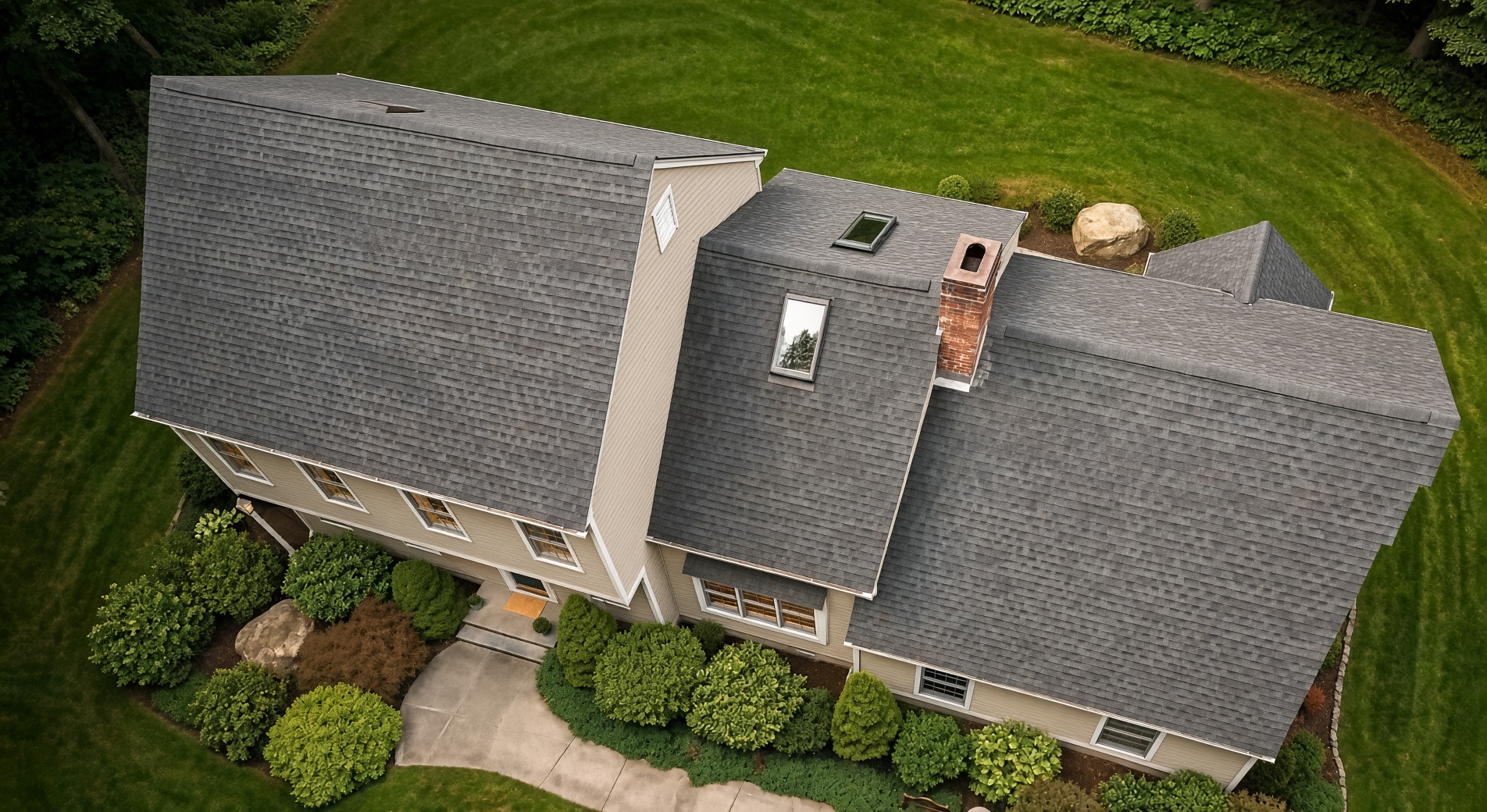
This is the question that keeps homeowners up at night, and for good reason. One answer costs a fraction of the other. Deciding between roof repair or replacement in Connecticut comes down to the condition of the whole roof rather than the size of the problem in front of you, which is not how most people approach it. The instinct is to look at the leak, decide it’s small, and assume a repair is the obvious call. Sometimes that’s right. But a small leak on a roof where the shingles are brittle everywhere is a different situation than the same leak on a roof with years left, and the leak looks identical in both cases. The other trap is the opposite one. Someone shows up after a storm, tells you the roof is shot, and the whole thing feels settled before anyone has climbed up. Neither shortcut serves you. What follows is how the decision actually gets made when somebody looks at the roof properly, and what to ask if you’re getting conflicting answers.
When a Repair Is the Right Call
Repair makes sense when the damage is contained and the rest of the roof is sound. A cracked pipe boot, a failed section of chimney flashing, a few shingles creased by wind on one slope. Those are isolated failures, and correcting them returns the roof to where it was. The other condition is that the roof still has life in it. If the shingles are flexible, the granule coverage is reasonable, and the decking is solid underfoot, then you’re maintaining something worth maintaining. Matching new shingles to an older roof is rarely perfect, since color fades with sun exposure, but that’s a cosmetic tradeoff rather than a reason to replace a functioning roof.
When Replacement Becomes the Honest Answer
The picture changes when failure is showing up in several places at once. Curling edges on multiple slopes, granules collecting in the gutters every time it rains, bald patches where the mat is visible, cracking across the field rather than in one spot. Those aren’t separate problems, they’re the same problem appearing everywhere. The other signal is history. If you’ve paid for a repair every season for the last few years, you’ve been buying a replacement in installments. And if the decking underneath has softened because water has been sitting on it, patching the surface doesn’t address what’s happening below. At that point replacement is the cheaper option over any reasonable time frame.
The Things That Change the Math
A few factors push the decision one way or the other regardless of the shingle condition. How many layers are already on the roof matters, since a second layer hides what’s underneath and adds weight. Ventilation is another. A roof that’s been cooking from below because the attic doesn’t breathe has aged faster than its years suggest, and replacing the surface without fixing the airflow repeats the problem. Storm damage introduces its own variable, because what the insurer determines can change what makes financial sense. And if you’re planning to sell within a couple of years, the calculation is different than if you’re staying put. None of these are reasons on their own, but they shift the balance.
How the Decision Should Get Made
With an inspection, not a phone call. The roof gets walked, all of it, not just the slope with the visible problem. The attic gets checked, because that’s where you see whether moisture has been getting in and whether the ventilation is doing anything. Everything gets photographed so you’re looking at the same evidence the contractor is. Then you get a recommendation with the reasoning attached, and ideally both options priced if both are genuinely viable. If someone gives you a verdict without going up there, or won’t show you what they found, that’s worth noticing. The right answer here should be defensible, not just asserted.