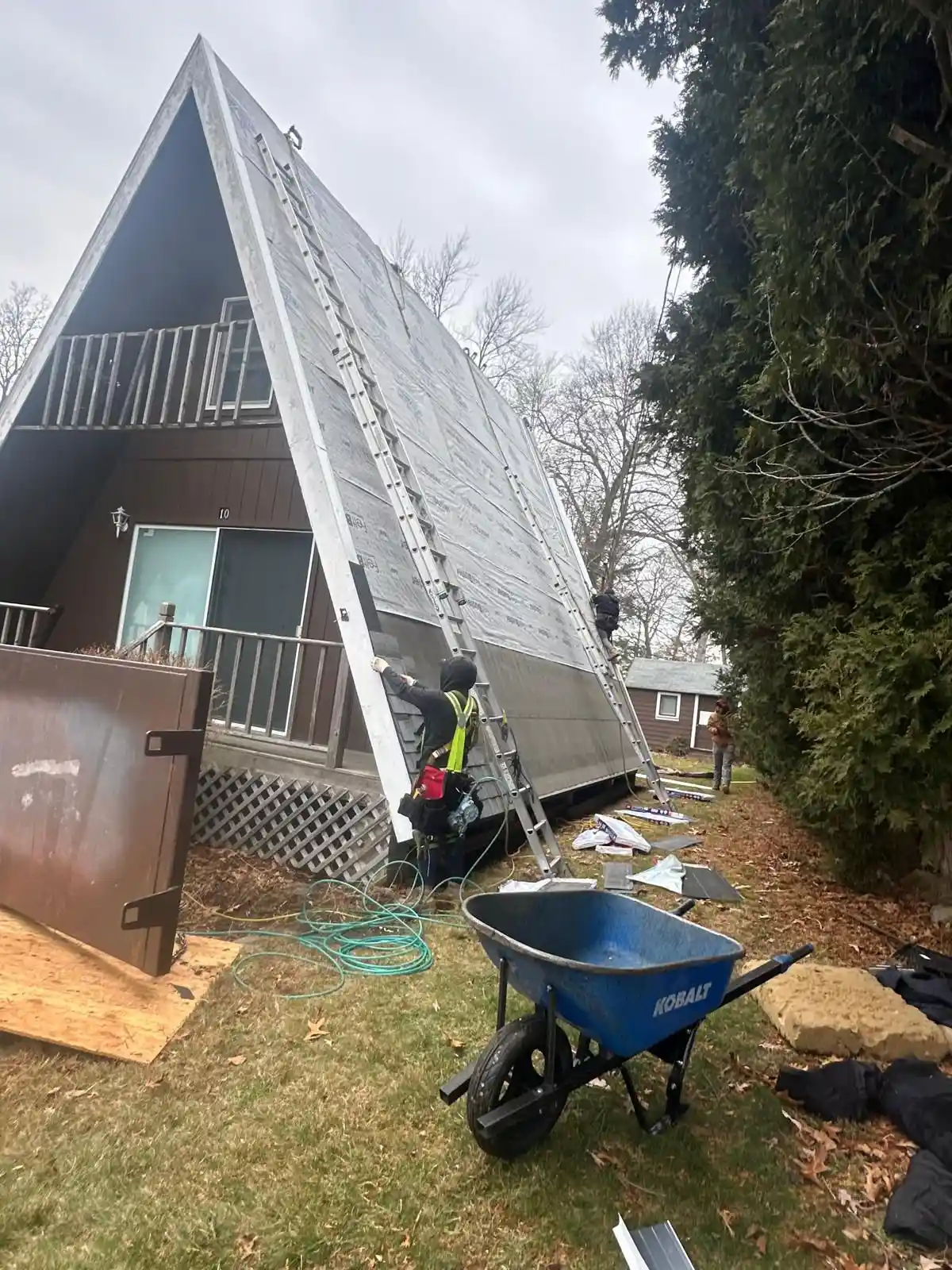
Search this question and you’ll get a number back within the first three results. Twice a year, spring and fall, done. It’s a tidy answer and it’s not wrong exactly, but it treats every house as though it were the same house. A roof inspection in Connecticut is worth scheduling around your actual roof, not around a generic calendar. A ten year old roof on an open lot with no trees near it is in a different situation than a twenty year old roof under heavy oak cover, and both are different from a roof that just took a serious wind event. What matters more than frequency is that somebody looks at the thing periodically and after anything unusual happens. Most roof problems are cheap when they’re caught early and expensive when they’re not, and the gap between those two states is measured in seasons rather than years. Here’s a more useful way to think about the timing, and what should actually happen during the visit.
What Changes the Right Interval
Age is the first factor. A newer roof that was installed correctly needs less attention than one approaching the end of its service life, though newer doesn’t mean immune. Tree cover is the second. Branches over the roof mean debris in the valleys, shade that keeps things damp, and the occasional limb coming down. Exposure matters too. A house on an open hillside takes more wind than one tucked between others. Then there’s history. If the roof has been patched before, if there’s been a leak, or if part of it is a different age than the rest, those areas earn a closer look. None of that fits into a single number, which is why the honest answer to the frequency question is that it depends on the roof.
The Times That Are Not OptionalThere are moments when waiting for the next scheduled check doesn’t make sense. After any storm that brought serious
wind, hail or heavy wet snow, the roof is worth looking at even if nothing seems wrong from the ground. Storm damage frequently isn’t visible from a driveway, and documenting it while it’s fresh matters if a claim gets involved. The same goes for any time you see something new: a stain on a ceiling, granules collecting in the gutter, a shingle in the yard. And if you’re buying or selling, an inspection gives both sides something concrete to work from instead of a guess about how many years are left.
What Should Happen During the Visit
A useful inspection covers more than the shingles. The whole roof gets walked, including the slopes you can’t see from the street. Flashing at chimneys, skylights, vents and wall joints gets checked, because that’s where most leaks start. Valleys and the eaves get attention since they carry the most water. The gutter line gets looked at, and so does the attic side, because damp insulation and rusted nail points tell you things the surface won’t. Everything found gets photographed. A visit that produces a verbal summary and nothing else leaves you with no record, no comparison point for next time and nothing to hand an adjuster if you ever need to.
What You Do With the Findings
Most inspections turn up small things. Sealant that’s dried out at a penetration, a lifted shingle, a section of flashing that’s starting to pull. Those get corrected while they’re still minor, which is the entire point of looking. Occasionally an inspection finds something bigger, and then the conversation shifts to whether a repair holds or whether the roof is closer to the end than anyone thought. Either way you end up with photographs and a written picture of the condition, which is useful for planning even if nothing needs doing right now. Knowing that your roof has a few good seasons left is worth something too.