


Shingle Loss or Displacement — The Most Visible Cause
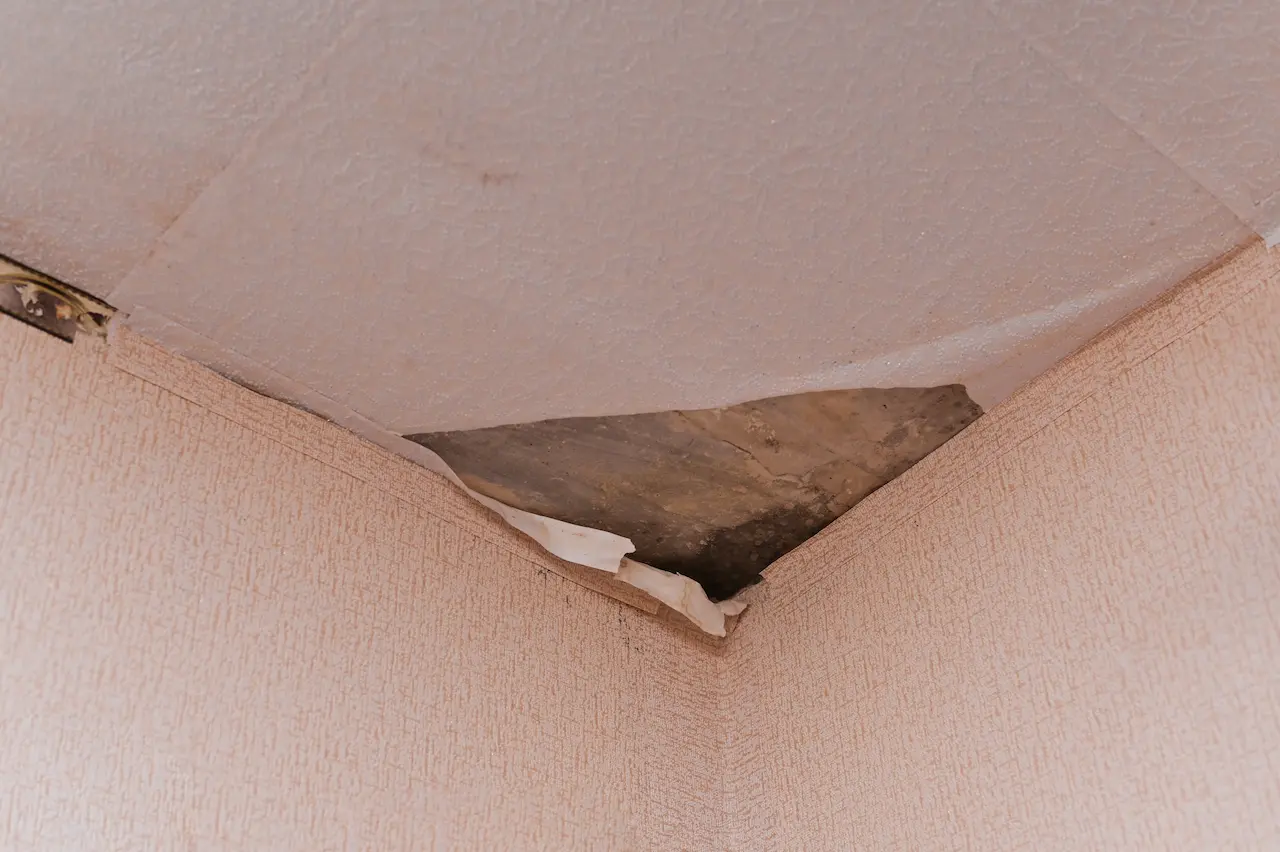
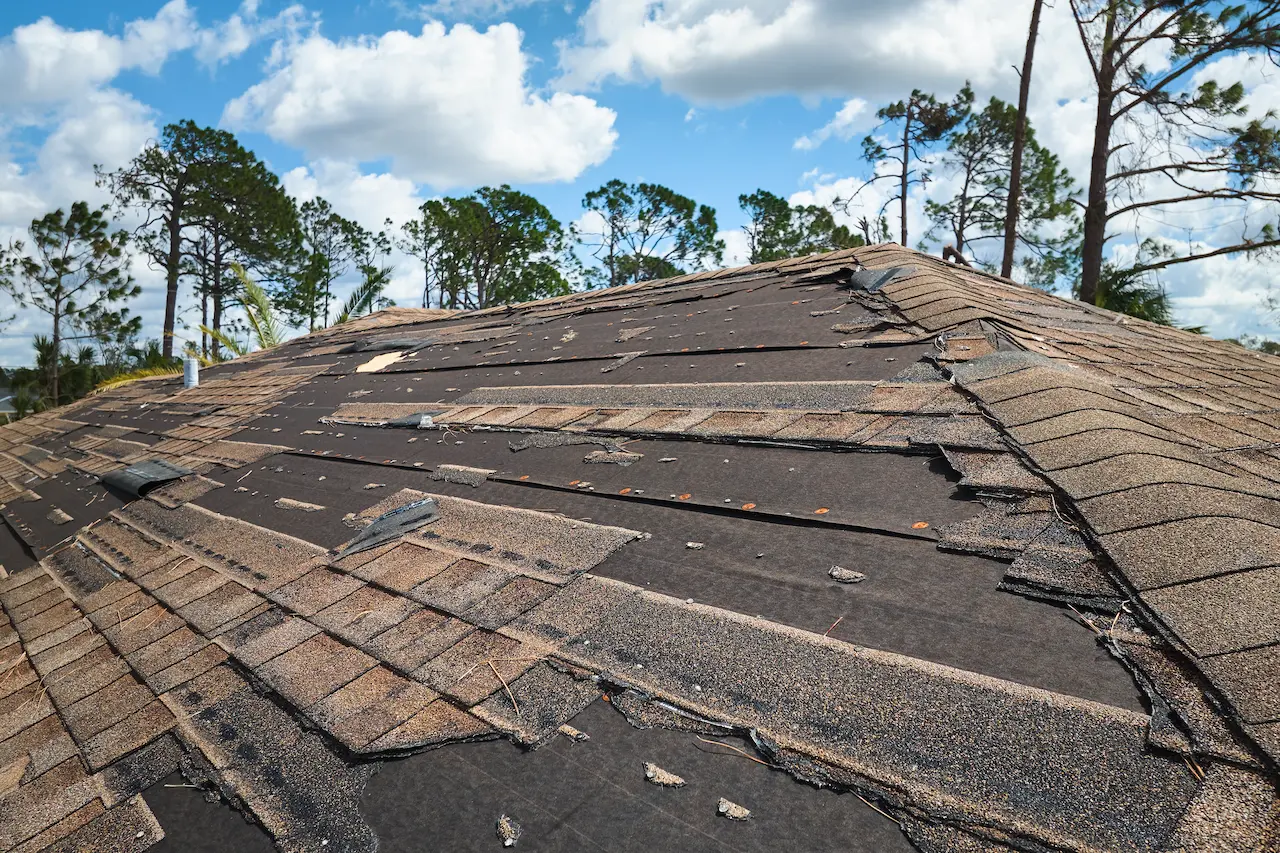
Nor'easter winds create uplift pressure on roof shingles that acts from below the shingle rather than pushing from above. When wind drives under the leading edge of a shingle — particularly shingles that have lost adhesive bond from age or improper installation — it lifts the shingle and tears it free from the nails that hold it. A single missing shingle section exposes the underlayment beneath directly to wind-driven rain, and Connecticut's nor'easter rain is not falling straight down — it is being driven horizontally at significant pressure. The underlayment may hold for one storm event, but it is not a long-term waterproofing system, and if multiple shingles are missing, the underlayment may already be compromised. From inside your home, shingle loss typically appears as a water stain directly below the affected roof section. From the ground — and only from the ground, not by walking on a wet or damaged roof — you may be able to see the darker patches of exposed underlayment or the gaps where shingles were.
Flashing Failure — The Invisible Leak Source
Flashing is the metal assembly that seals roof penetrations — chimneys, skylights, vents, and the intersections between roof sections at valleys. It is also the most common source of Connecticut roof leaks that homeowners cannot diagnose from below. Nor'easter wind pressure acts on flashing in two ways: it pushes against vertical flashing faces like chimney counter flashing, and it drives water under any gap in the step flashing-to-shingle interface. Standard galvanized flashing corrodes over time in Connecticut's climate — coastal homes experience accelerated corrosion from salt air — and corroded flashing develops pinholes and separation gaps that are invisible from the ground but allow significant water entry during the sustained pressure of a nor'easter. If your Connecticut roof leak appears to be coming from around a chimney, skylight, or at a point where two roof sections meet, flashing failure is the most likely cause. This type of repair requires an experienced contractor who can assess the full flashing assembly from the roof surface.
Ice Dam Formation — A Specific Connecticut Winter Problem
Ice dams are a specifically Connecticut winter roofing problem that nor'easters can initiate or worsen significantly. When snow accumulates on a Connecticut roof during a nor'easter and then the temperature cycles above and below freezing — a pattern Connecticut's winter weather produces regularly — snow melts at the warm roof deck and refreezes at the cold eave. The ice dam that forms prevents meltwater from draining off the roof, and backed-up water finds its way under shingles and through the roof deck into the attic and ceiling below. Ice dam leaks in Connecticut typically appear as ceiling stains near exterior walls or near the eave line — not in the center of the ceiling where a shingle or flashing failure would appear. Ice dams are not a surface repair problem — they indicate an attic ventilation or insulation issue that must be addressed to prevent recurrence. Emergency remediation involves careful ice removal by a professional and interior stabilization, not a surface patch.
What To Do Right Now While You Wait for Help
The most important thing you can do when you discover a Connecticut roof leak after a nor'easter is to document it and protect the interior — not attempt roof repairs yourself. Interior protection: place buckets under active drips, move furniture and valuables away from wet areas, and use plastic sheeting to protect flooring. Documentation: photograph the interior water damage from multiple angles, including the ceiling stain, any active dripping, and any visible exterior damage you can see safely from the ground. Contact your homeowner's insurance company to report the storm damage — most Connecticut policies require prompt notification. Contact a licensed Connecticut roofing contractor for an emergency assessment. Expert Roofing Restoration LLC provides 24/7 emergency response throughout Connecticut, deploying assessment crews as quickly as conditions allow. Do not attempt to access a wet or damaged roof yourself — the risk of injury is significant, and disturbing damaged sections before professional assessment can complicate the insurance claim process.
Frequently Asked Questions
Most Connecticut homeowner's insurance policies cover sudden and accidental storm damage — including wind damage, hail damage, and ice dam-related damage when caused by a specific storm event. Contact your carrier promptly and document all damage before any temporary repairs are made.
Expert Roofing Restoration LLC provides 24/7 emergency response throughout Connecticut. We deploy assessment and tarping crews as quickly as conditions allow following major storm events — typically same-day for active leaks when weather permits safe roof access.
Only if you can safely access the roof from a ladder at the eave without walking on the damaged surface. Temporary tarping is effective when done correctly, but walking a damaged or wet roof without proper safety equipment significantly increases the risk of serious injury.
Emergency tarping and stabilization can typically be completed in one to two hours for a standard residential property. Permanent repair scheduling depends on the scope of damage, material availability, and the volume of storm damage calls following a major nor'easter.
Insurance coverage applies to the sudden and accidental damage caused by the storm event, not to pre-existing deterioration. A professional damage assessment separates storm-caused damage from pre-existing conditions — critical for maximizing your claim coverage.
Get Emergency Roof Help in Connecticut — Available 24/7
Don't wait. Active roof leaks get worse with every rain event. Call Expert Roofing Restoration LLC for a same-day assessment and emergency stabilization anywhere in Connecticut.